Helping You Choose the Right Metal for Your Fabrication Project
Material selection is one of the most important decisions in sheet metal fabrication because it can directly affect performance, cost, lead time, manufacturability, and more. At Baillie Fabricating & Welding, we work with a range of materials, but we specialize in projects with steel, stainless steel, and aluminum. All three can be excellent choices, but the right option depends on the part’s application and a customer’s priorities.
Ultimately, the final material choice belongs to the customer and their design team. But when customers need help making that decision, we’re happy to talk through the important questions and offer initial recommendations based on our fabrication experience. Here are some of the key questions we discuss.
Where will the product be used? What conditions will it face?
A part used indoors at room temperature has different requirements than one exposed to high heat, freezing temperatures, saltwater, chemical fumes, or other harsh conditions. Environmental conditions can influence whether steel, stainless steel, aluminum, or another material is the best fit.
For example, stainless steel is often selected when corrosion resistance is important, while aluminum may be useful when weight reduction is the most important priority.
What is the required strength of the product?
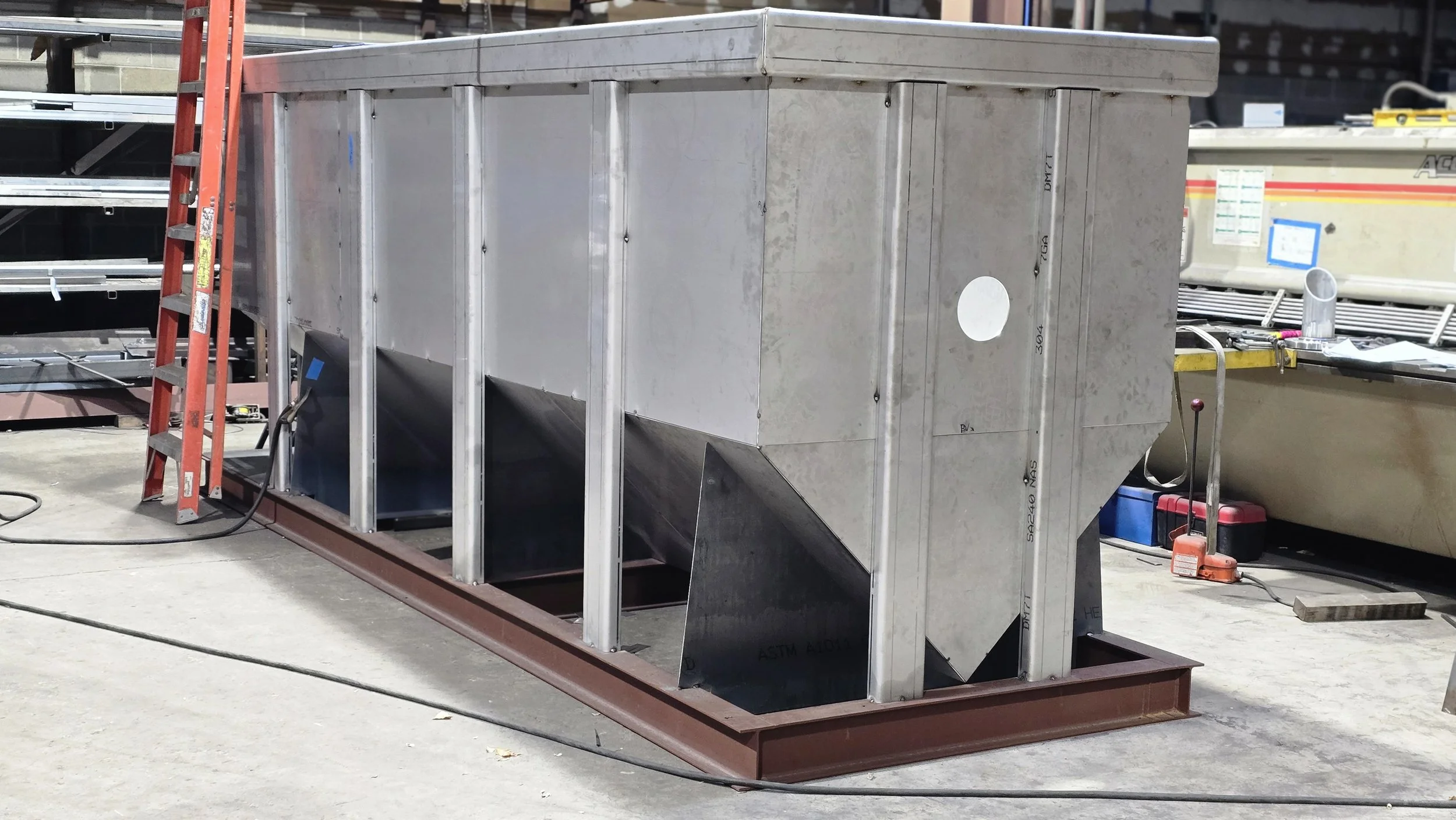
Material selection also depends on how much strength the product requires. For instance, structurally loaded parts or parts exposed to vibration and flexing need careful evaluation. Vibration and repeated movement can contribute to metal fatigue over time, so it’s important to think in the long term.
A part may look simple on paper but still require a stronger material or a different design approach.
Does the product need a particular aesthetic?
Aesthetics can also play a major role in material choice. A visible part may need a specific finish or surface appearance.
A grained stainless steel finish creates a very different look than painted steel or powder coated aluminum. Some finishes also pair better with certain materials. If final appearance matters, we prefer to discuss both the material and the intended finishing process at the start.
Does the product have any weight restrictions or weight minimums?
Some products need to be light for movement or operation. Others need a minimum weight to function correctly, such as certain conveyor or equipment components. A part’s weight can vary significantly depending on the material used, so this is a central factor as you design for sheet metal fab.
Will your project require finishing, coating, or other secondary processes?
It’s important to consider secondary processes during the material selection process because they can affect both material choice and the manufacturing process. Many projects require specific finishing or coating processes from our vetted vendors, including powder coating, painting, galvanizing, anodizing, sandblasting, or chemical coatings.
What stock material sizes will you need, and could that affect your design?
Material availability can also affect how a part is built. If a design calls for a very large single-piece component (for instance, a component made from an 84” by 132” sheet), it may need to be redesigned as a welded assembly with seams or joints. That might not change the choice of material, but the material’s availability in certain sizes can affect cost and appearance.
What are you aiming for in your product’s longevity?
Expected product lifespan matters, too. A part used temporarily in a mild environment may not require the same material or finish as a component expected to last for years in harsh conditions.
Will you be exporting the product?
If the finished product will be exported or used internationally, material requirements may vary depending on the destination country.
For example, projects going to European countries may need to account for CE-related requirements, product documentation, or other standards that could affect material selection and certification. Depending on the application, these requirements may also involve restrictions around material composition or approved substances.
Tell us about any exporting plans early so we can account for them in our quoting and material sourcing.
Does your project require domestic material certification or government/military specifications?
Some projects, especially government, military, or defense-related work, may require domestic material certification or other specific sourcing requirements. In these cases, it is important to clarify whether the material must meet a particular standard or certification requirement. These details can affect availability, cost, and lead time, especially for certain stainless steel products or specialty materials.
Let’s discuss your material requirements
The best material choice is the one that fits both the application and your priorities. We’re ready to talk through these factors with you ahead of your project and help you as you decide which material will be the right one for your project.
Contact our Pennsylvania metal fabrication shop today to discuss your next project!