Specialized Metal Fabrication for Food Processing, Pharmaceutical, and Packaging Equipment
At Baillie Fabricating & Welding, we partner with customers across many different industries. But we’ve had especially long-running partnerships with businesses in three industries in particular: food processing, pharmaceutical, and packaging equipment. Over more than a decade, we have learned to fabricate products in line with the priorities of these industries, including washability, fine surface finishes, serviceability, and structural strength.
Food Processing Equipment: Washdown, Runoff, and Serviceability
The food processing industry has a strong presence here in Pennsylvania, and we’ve worked with many customers in this sector for years. Our CAD modeling services have been valuable in food processing, helping customers reverse engineer older components, update legacy drawings, and design new equipment.
Through our long experience in the food processing industry, we’ve learned that much of the equipment is built around a few core principles.
Washability
Food processing equipment has to be designed for frequent washdowns and constant cleaning. Many processors pressure wash machinery at the end of a shift to remove bacteria and other contaminants, which means the equipment must stand up to those constant washes. Bearings, motors, controls, and electrical enclosures may need to be fully sealed for these environments.
Proper cleaning also requires equipment to be manufactured for water runoff; food processing components should avoid flat surfaces where water can sit. Framework and other fabricated features are often designed so water runs off instead of pooling.
Some designs avoid hollow tubing because internal cavities can allow water or contaminants to collect if a weld seam is not fully sealed. In these cases, we are ready to build with solid bar stock instead.
Material Selection for Cleaning
Material selection is critical. Stainless steel is particularly common in this industry because caustic, acidic, or citrus-based cleaners may be used to wash the equipment. The goal is to create a sanitary environment while reducing corrosion risk.
Serviceability
Food processing lines often run around the clock, so customers need equipment that can be repaired quickly. Designing around standard bearings, sprockets, belts, and other off-the-shelf components lets maintenance teams keep common replacement parts in inventory and reduce downtime through faster repairs.
Pharmaceutical Fabrication: Cleaner Surfaces, Higher Finish Requirements
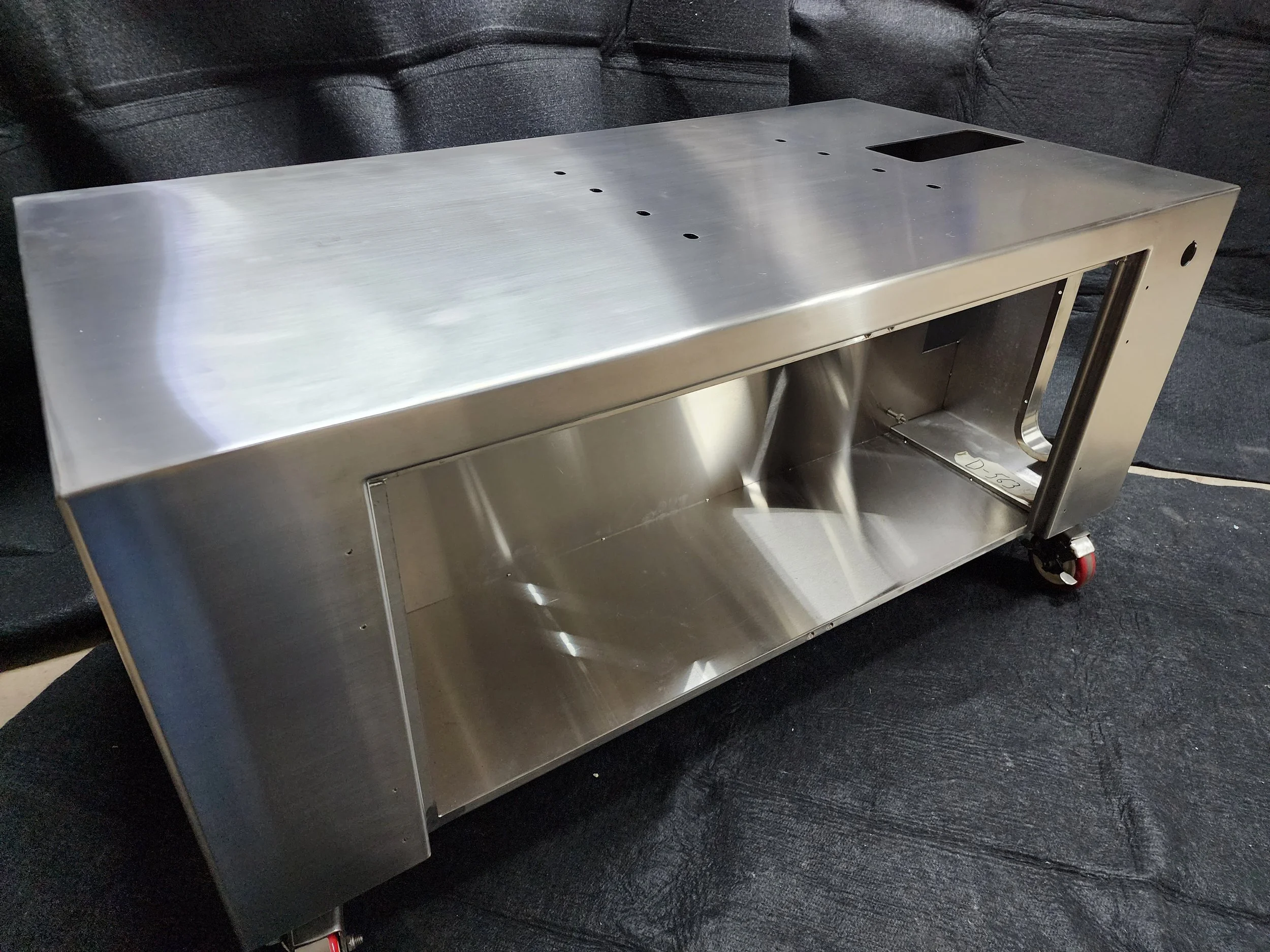
The pharmaceutical industry is also well established in our region, and that has led to more than a decade of work with pharmaceutical customers. Pharmaceutical equipment shares many of the same priorities as food processing, but the requirements can be more demanding.
316 Stainless Steel
As in the food processing industry, stainless steel remains important for cleanliness and corrosion resistance. But pharmaceutical applications may call for higher-grade materials such as 316 stainless steel, especially when stronger cleaning chemicals are involved.
Finer Surface Finishes
In food processing, a No. 4 brushed polish finish is common because it cleans well while helping hide scratches and normal wear. In pharmaceutical work, especially when a drug or powder may contact the surface, customers often require a finer or even mirror-polished finish. In addition, weld seams, pits, ripples, or rough areas can create places where material can catch, so exposed welds often need to be finished carefully.
That level of polishing takes time and experience. For many pharmaceutical projects, finish quality and cleanliness are major cost drivers, which is why industry experience is so important in helping to deliver the results customers expect.
Packaging Equipment: Strength, Automation, and Precision
The packaging industry has a different set of priorities for its equipment. Cleanliness still matters, but washdown capability is not always as critical because many products are already in containers before they enter the packaging process. That gives designers freedom to use a greater mix of materials, including stainless steel, carbon steel, and powder-coated components.
Structural Stability
The biggest challenge in many packaging applications is structural performance. Packaging lines often use heavy robotics that move quickly and create repeated force on the frame. Bases need to be strong enough to handle that motion without flexing or shifting, which often requires heavy plate and other structural elements.
Precision Machined Parts
When a robot, clamp, conveyor, or other automated feature needs to work in relation to another component, machined surfaces may be required to keep everything aligned. The in-house machining capabilities at our metal fab shop make multi-step projects more efficient by keeping fabrication and machining under one roof.
A Fabrication Partner for Any Industry
Whether you need food processing equipment, pharmaceutical components, packaging machinery, or another precision sheet metal project, Baillie Fabricating & Welding can help you move from concept or repair need to a finished assembly. Contact our Pennsylvania metal fabrication shop to discuss your next project or request a quote.